Buy bauprojekte.eu ?
We are moving the project
bauprojekte.eu .
Are you interested in purchasing the domain
bauprojekte.eu ?
domain@kv-gmbh.de · 0541-91531010
Buy bauprojekte.eu ?
Is it competitive or non-competitive inhibition?
It is non-competitive inhibition. This is because the inhibitor binds to an allosteric site on the enzyme, which is different from the active site where the substrate binds. This type of inhibition does not compete with the substrate for binding to the enzyme, hence the name non-competitive inhibition. **
Non-competitive inhibition, right?
Non-competitive inhibition is a type of enzyme inhibition where the inhibitor binds to a site on the enzyme that is not the active site. This binding causes a conformational change in the enzyme, making it less effective at catalyzing the reaction. Non-competitive inhibitors do not compete with the substrate for binding to the enzyme. Instead, they can bind to the enzyme-substrate complex or to a separate allosteric site on the enzyme. **

Similar search terms for Non-competitive
Top-Angebote
Products related to Non-competitive:
-
Gmt Games Cross-Bronx Expressway Board Game - Competitive City-Building Game Ages 12+ 1-3 PlayersImmerse yourself in the historically inspired competitive city-building board game Cross-Bronx Expressway. Set in the South Bronx from 1940 to 2000, players take control of one of three asymmetric factions, each with different aims and priorities, while working together to keep the borough viable. The game explores the social and economic forces behind urban development through a card-driven sequence of play, where players build infrastructure and organisations, form coalitions, manage resources, and respond to issues affecting vulnerable communities. Cooperation is essential, but each faction must also pursue its own objectives. This thought-provoking game is part of the Irregular Conflicts Series and offers a unique blend of strategic gameplay and urban development challenges.74,02 £*Shipping: 0,00 £Secure redirect to the provider
-
Office Dog Schadenfreude - Competitive Strategy Board Game, Castle SettingWelcome to Castle Schadenfreude, where influence, intrigue, and carefully planned misfortune shape the struggle for status. In this competitive board game, players take on the roles of ambitious residents seeking advancement within the castle. To get ahead, recruit a dubious assortment of castle staff, including the Cook, Guard, Cultist, Jester, and Executioner. Each character can help disrupt your rivals and create opportunities for your own rise. Timing, negotiation, and tactical decision-making are central as players attempt to turn the castle’s rivalries to their advantage. Schadenfreude combines take-that interaction with an imaginative setting, making each game a contest of judgment, opportunity, and calculated consequences. This card game features character-driven play with distinctive castle staff and interactive gameplay focused on rivalry and disruption, making it a choice for groups who enjoy strategic social games.19,99 £*Shipping: 3,95 £Secure redirect to the provider
-
Grail Games Fantasy Brewers Competitive Strategy Board Game - Brewmaster EditionImmerse yourself in the world of Fantasy Brewers, a competitive strategy game where you take on the role of a dwarven Brewmaster. Set during the build-up to the Orctober BeerFest, each player develops a brewery, manages a farm, and directs a team of workers to create the most successful drinks. Players place workers to carry out actions, adapt their plans as they buy and sell goods, brew beer, distill whisky, and improve their facilities. Resources must be managed carefully, with opportunities to extend the brewery, recruit additional helpers, and decorate for the approaching festival. The game is won by earning Victory Points through brewery decisions and festival preparations. The player with the most Victory Points at the end wins the Golden Stein and the title of champion brewer. This game combines resource management and economic decision-making with a unique theme, making it a great addition to any board game collection.33,54 £*Shipping: 3,95 £Secure redirect to the provider



-
What is the difference between competitive and non-competitive inhibition?
Competitive inhibition occurs when a molecule competes with the substrate for the active site of the enzyme, thus reducing the enzyme's ability to bind with the substrate. Non-competitive inhibition, on the other hand, occurs when a molecule binds to a site on the enzyme other than the active site, causing a conformational change in the enzyme that reduces its activity. In competitive inhibition, increasing the substrate concentration can overcome the inhibition, while in non-competitive inhibition, increasing the substrate concentration does not alleviate the inhibition. **
-
Is non-competitive inhibition irreversible or reversible?
Non-competitive inhibition is a type of enzyme inhibition that is reversible. In non-competitive inhibition, the inhibitor binds to the enzyme at a site other than the active site, causing a conformational change in the enzyme that reduces its activity. This type of inhibition can be overcome by increasing the substrate concentration, as it does not involve permanent alteration of the enzyme. **
-
What is an example of non-competitive inhibition?
An example of non-competitive inhibition is the binding of an allosteric inhibitor to an enzyme at a site other than the active site. This binding causes a conformational change in the enzyme, which reduces its activity and prevents the substrate from binding to the active site. This type of inhibition does not compete with the substrate for binding to the active site, hence the term "non-competitive." An example of this is the binding of ATP to the enzyme phosphofructokinase in glycolysis, which inhibits its activity. **
-
Can you give me an example of competitive and non-competitive inhibition in biology?
Sure! In competitive inhibition, a molecule similar in structure to the substrate competes with the substrate for the active site of the enzyme. This prevents the substrate from binding to the enzyme and carrying out its normal function. An example of this is the drug statins, which competitively inhibit the enzyme HMG-CoA reductase, involved in cholesterol synthesis. In non-competitive inhibition, a molecule binds to the enzyme at a location other than the active site, causing a conformational change in the enzyme that reduces its activity. An example of this is the poison cyanide, which non-competitively inhibits the enzyme cytochrome c oxidase in the electron transport chain, disrupting cellular respiration. **


Is allosteric inhibition the same as non-competitive inhibition?
Allosteric inhibition and non-competitive inhibition are not the same, although they are related. Non-competitive inhibition refers to the binding of an inhibitor to a site on the enzyme that is not the active site, thereby preventing the substrate from binding to the active site. Allosteric inhibition, on the other hand, occurs when an inhibitor binds to a site on the enzyme that is distinct from the active site, causing a conformational change in the enzyme that reduces its activity. While both types of inhibition involve the binding of an inhibitor to a site other than the active site, allosteric inhibition specifically involves a change in the enzyme's shape and activity. **
What is the difference between non-competitive and allosteric inhibition?
Non-competitive inhibition occurs when an inhibitor binds to an enzyme at a site other than the active site, causing a conformational change that prevents the substrate from binding. This type of inhibition is not affected by the concentration of the substrate. On the other hand, allosteric inhibition occurs when an inhibitor binds to an allosteric site on the enzyme, causing a conformational change that reduces the enzyme's activity. Allosteric inhibition is often reversible and can be overcome by increasing the concentration of the substrate. **
Top-Angebote
Products related to Non-competitive:
-
Apiary Competitive Strategy Board Game - Worker-Placement Hive-Building for 1-4 PlayersBuild a thriving spacefaring hive in Apiary, a competitive worker-placement and hive-building board game from Stonemaier Games. Players develop their hives by assigning specialized bees to gather resources, explore the surrounding universe, and expand their growing colonies. Each decision helps shape your engine and determines how efficiently your hive can develop. Apiary combines worker placement with resource management, exploration, and tableau-building elements. The game offers multiple strategic routes, allowing players to focus on different aspects of hive development during each session.59,47 £*Shipping: 0,00 £Secure redirect to the provider
-
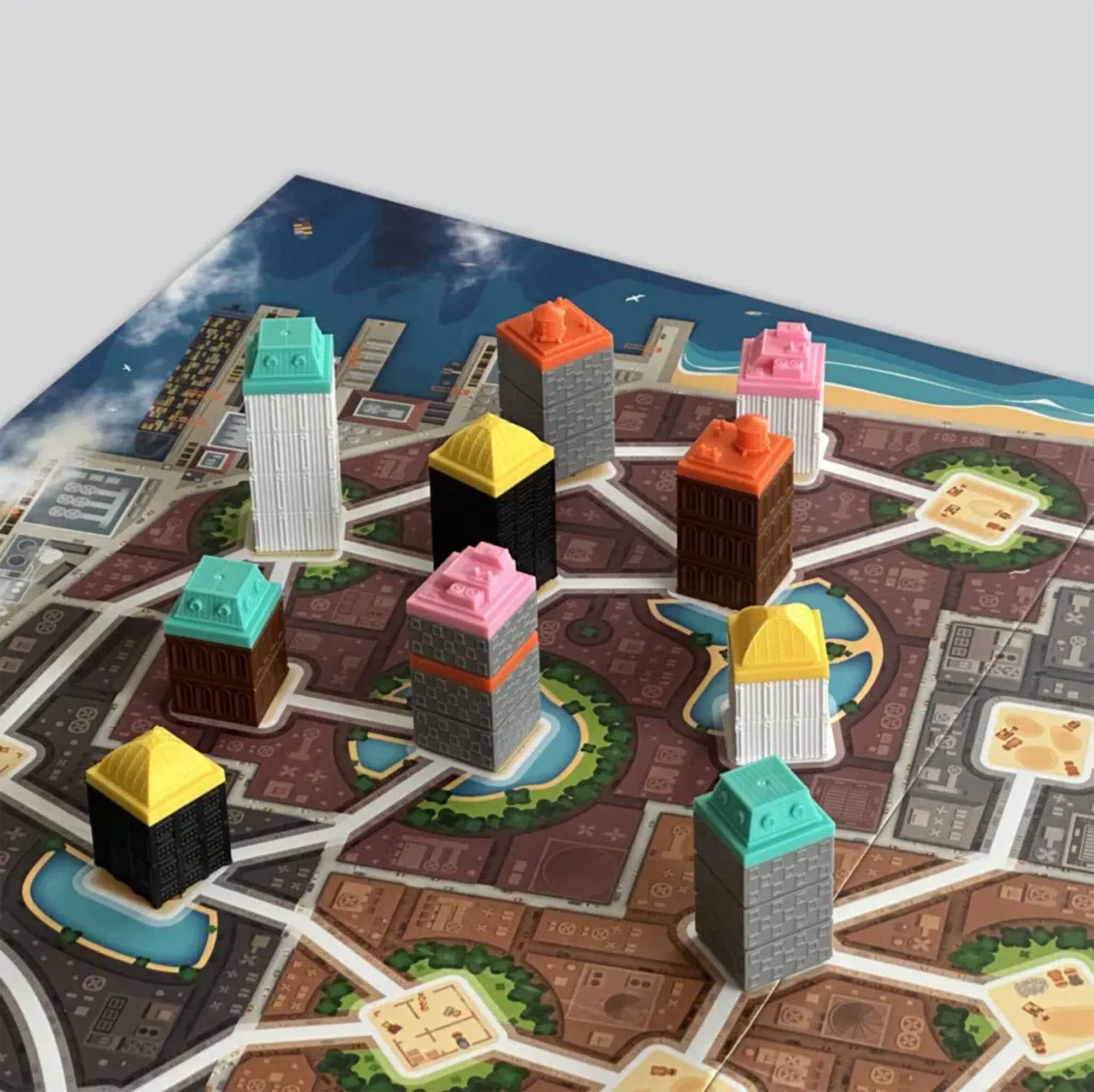
Monolith Board Games Tower Up Board Game - Competitive Urban Construction Gameplay for Family Game NightsBuild a thriving city in Tower Up, a competitive urban construction game from Monolith Board Games. Players compete to develop a new city and grow their fortunes through carefully planned construction, balancing short-term opportunities with longer-term plans. Each decision affects the opportunities available across the expanding urban landscape. The game combines accessible rules with meaningful strategic choices, supporting repeat play. Suitable for family game nights and modern board-game collections, Tower Up offers a fast-moving tabletop experience with room for thoughtful decisions throughout the game.31,18 £*Shipping: 3,95 £Secure redirect to the provider
-
Gmt Games Cross-Bronx Expressway Board Game - Competitive City-Building Game Ages 12+ 1-3 PlayersImmerse yourself in the historically inspired competitive city-building board game Cross-Bronx Expressway. Set in the South Bronx from 1940 to 2000, players take control of one of three asymmetric factions, each with different aims and priorities, while working together to keep the borough viable. The game explores the social and economic forces behind urban development through a card-driven sequence of play, where players build infrastructure and organisations, form coalitions, manage resources, and respond to issues affecting vulnerable communities. Cooperation is essential, but each faction must also pursue its own objectives. This thought-provoking game is part of the Irregular Conflicts Series and offers a unique blend of strategic gameplay and urban development challenges.74,02 £*Shipping: 0,00 £Secure redirect to the provider
-
Office Dog Schadenfreude - Competitive Strategy Board Game, Castle SettingWelcome to Castle Schadenfreude, where influence, intrigue, and carefully planned misfortune shape the struggle for status. In this competitive board game, players take on the roles of ambitious residents seeking advancement within the castle. To get ahead, recruit a dubious assortment of castle staff, including the Cook, Guard, Cultist, Jester, and Executioner. Each character can help disrupt your rivals and create opportunities for your own rise. Timing, negotiation, and tactical decision-making are central as players attempt to turn the castle’s rivalries to their advantage. Schadenfreude combines take-that interaction with an imaginative setting, making each game a contest of judgment, opportunity, and calculated consequences. This card game features character-driven play with distinctive castle staff and interactive gameplay focused on rivalry and disruption, making it a choice for groups who enjoy strategic social games.19,99 £*Shipping: 3,95 £Secure redirect to the provider
-
Is it competitive or non-competitive inhibition?
It is non-competitive inhibition. This is because the inhibitor binds to an allosteric site on the enzyme, which is different from the active site where the substrate binds. This type of inhibition does not compete with the substrate for binding to the enzyme, hence the name non-competitive inhibition. **
-
Non-competitive inhibition, right?
Non-competitive inhibition is a type of enzyme inhibition where the inhibitor binds to a site on the enzyme that is not the active site. This binding causes a conformational change in the enzyme, making it less effective at catalyzing the reaction. Non-competitive inhibitors do not compete with the substrate for binding to the enzyme. Instead, they can bind to the enzyme-substrate complex or to a separate allosteric site on the enzyme. **
-
What is the difference between competitive and non-competitive inhibition?
Competitive inhibition occurs when a molecule competes with the substrate for the active site of the enzyme, thus reducing the enzyme's ability to bind with the substrate. Non-competitive inhibition, on the other hand, occurs when a molecule binds to a site on the enzyme other than the active site, causing a conformational change in the enzyme that reduces its activity. In competitive inhibition, increasing the substrate concentration can overcome the inhibition, while in non-competitive inhibition, increasing the substrate concentration does not alleviate the inhibition. **
-
Is non-competitive inhibition irreversible or reversible?
Non-competitive inhibition is a type of enzyme inhibition that is reversible. In non-competitive inhibition, the inhibitor binds to the enzyme at a site other than the active site, causing a conformational change in the enzyme that reduces its activity. This type of inhibition can be overcome by increasing the substrate concentration, as it does not involve permanent alteration of the enzyme. **
Similar search terms for Non-competitive
-
Grail Games Fantasy Brewers Competitive Strategy Board Game - Brewmaster EditionImmerse yourself in the world of Fantasy Brewers, a competitive strategy game where you take on the role of a dwarven Brewmaster. Set during the build-up to the Orctober BeerFest, each player develops a brewery, manages a farm, and directs a team of workers to create the most successful drinks. Players place workers to carry out actions, adapt their plans as they buy and sell goods, brew beer, distill whisky, and improve their facilities. Resources must be managed carefully, with opportunities to extend the brewery, recruit additional helpers, and decorate for the approaching festival. The game is won by earning Victory Points through brewery decisions and festival preparations. The player with the most Victory Points at the end wins the Golden Stein and the title of champion brewer. This game combines resource management and economic decision-making with a unique theme, making it a great addition to any board game collection.33,54 £*Shipping: 3,95 £Secure redirect to the provider
-
Stonemaier Games Viticulture: Essential Edition - Strategic Board Game for Competitive PlayBuild a Tuscan wine-making empire in Viticulture: Essential Edition, a strategic board game where you take on the role of a vineyard owner in rustic, pre-modern Tuscany. Develop your estate, plant vines, harvest grapes, and turn them into wine while competing to fulfill valuable orders. This game challenges you to plan across the seasons, carefully assigning workers and specialists to improve your vineyard and balance immediate opportunities with longer-term growth. Each decision can influence the efficiency and prosperity of your winery. The Essential Edition includes refined cards and rules for an updated playing experience, offering a rich tabletop experience for players who enjoy planning, resource management, and strategic decision-making.45,95 £*Shipping: 3,95 £Secure redirect to the provider
-
What is an example of non-competitive inhibition?
An example of non-competitive inhibition is the binding of an allosteric inhibitor to an enzyme at a site other than the active site. This binding causes a conformational change in the enzyme, which reduces its activity and prevents the substrate from binding to the active site. This type of inhibition does not compete with the substrate for binding to the active site, hence the term "non-competitive." An example of this is the binding of ATP to the enzyme phosphofructokinase in glycolysis, which inhibits its activity. **
-
Can you give me an example of competitive and non-competitive inhibition in biology?
Sure! In competitive inhibition, a molecule similar in structure to the substrate competes with the substrate for the active site of the enzyme. This prevents the substrate from binding to the enzyme and carrying out its normal function. An example of this is the drug statins, which competitively inhibit the enzyme HMG-CoA reductase, involved in cholesterol synthesis. In non-competitive inhibition, a molecule binds to the enzyme at a location other than the active site, causing a conformational change in the enzyme that reduces its activity. An example of this is the poison cyanide, which non-competitively inhibits the enzyme cytochrome c oxidase in the electron transport chain, disrupting cellular respiration. **
-
Is allosteric inhibition the same as non-competitive inhibition?
Allosteric inhibition and non-competitive inhibition are not the same, although they are related. Non-competitive inhibition refers to the binding of an inhibitor to a site on the enzyme that is not the active site, thereby preventing the substrate from binding to the active site. Allosteric inhibition, on the other hand, occurs when an inhibitor binds to a site on the enzyme that is distinct from the active site, causing a conformational change in the enzyme that reduces its activity. While both types of inhibition involve the binding of an inhibitor to a site other than the active site, allosteric inhibition specifically involves a change in the enzyme's shape and activity. **
-
What is the difference between non-competitive and allosteric inhibition?
Non-competitive inhibition occurs when an inhibitor binds to an enzyme at a site other than the active site, causing a conformational change that prevents the substrate from binding. This type of inhibition is not affected by the concentration of the substrate. On the other hand, allosteric inhibition occurs when an inhibitor binds to an allosteric site on the enzyme, causing a conformational change that reduces the enzyme's activity. Allosteric inhibition is often reversible and can be overcome by increasing the concentration of the substrate. **
* All prices are inclusive of VAT and, if applicable, plus shipping costs. The offer information is based on the details provided by the respective shop and is updated through automated processes. Real-time updates do not occur, so deviations can occur in individual cases. ** Note: Parts of this content were created by AI.